 My Second Life
- Section
- 01 Healthy
- Reading
- 5 min
- Published
Creatine Is the Cheapest Upgrade Available to a Middle-Aged Man
The most-studied supplement in sports nutrition turns out to be a brain supplement.
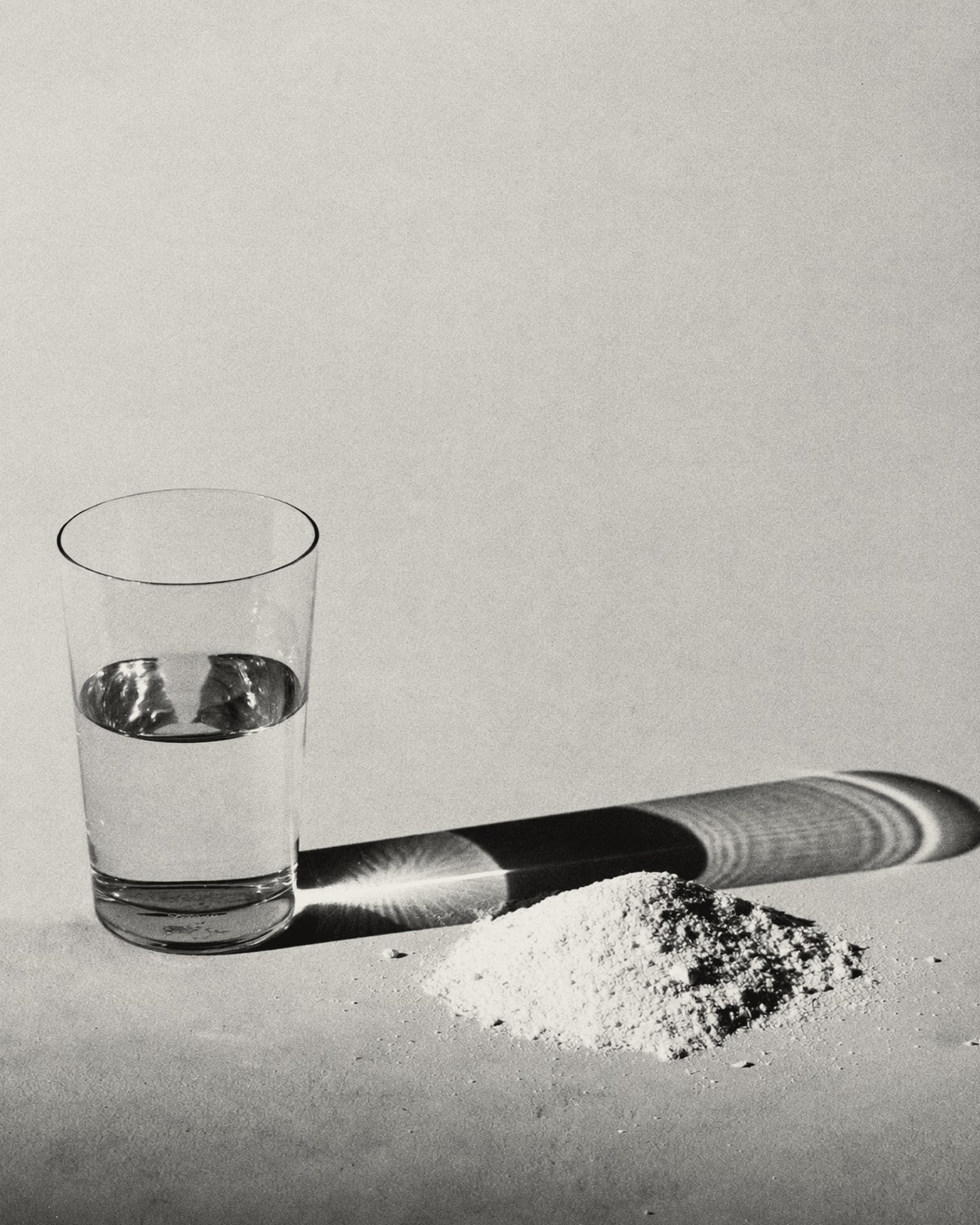
I’m of the view that most men over forty are buying the wrong supplements. Most of my male friends in this age group (at least those they care one wit about their health) go for the exotic stuff — mushroom extracts, peptides, nootropic blends with a proprietary label so the dose stays hidden. Meanwhile the boring compound with a thousand peer-reviewed human trials behind it sits on the bottom shelf at twenty quid a kilo, is dismissed as something for teenagers who want bigger arms.
That is a mistake. Creatine monohydrate is not a bodybuilding supplement but a naturally occurring chemical compound. It is an energy-buffering system, and your brain works it as hard as your quadriceps do.
The mechanism is simple. Every cell runs on ATP. When demand spikes — a heavy set, a hard problem, a night without sleep — ATP gets spent faster than it can be rebuilt. Phosphocreatine is the reserve tank that regenerates it on the spot. Load more creatine into the tissue and you extend the window before performance falls off a cliff. That is the whole story. Muscle and brain, same currency.
The brain case is now stronger than the muscle case
This is the part that should change your thinking. It’s certainly changed mine, especially with my inter-continental trips across time zones. At my age, I’ve definitely started feeling the effect of doing so, not just physically but also mentally (screw you brain fog!!).
It boosts ATP production to fuel your muscles, and emerging research shows it also sharpens cognitive function, especially under stress and fatigue.
In 2024, researchers at Forschungszentrum Jülich gave fifteen volunteers a single high dose of creatine — 0.35 g/kg, roughly 26 g for a 75 kg man — during 21 hours of sub-total sleep deprivation. Cognitive performance improved from three and a half hours after the dose and the effect held or grew out to nine hours. Word memory rose about 10 per cent. Processing speed on language, logic and numeric tasks improved by 16 to 29 per cent. Measured fatigue fell. They watched the brain’s high-energy phosphates shift on magnetic resonance spectroscopy while it happened.
Read the caveats before you get excited. Fifteen people. Average age 23. A single dose, never replicated in men in their fifties. And a dose that size in one hit will send a fair number of people straight to the bathroom. This is a proof of mechanism, not a protocol.
The wider literature is where the age pattern gets interesting. A 2023 meta-analysis in Nutrition Reviews pooled memory trials in healthy adults and found a modest overall effect (SMD 0.29). Split by age, it was 0.88 in adults aged 66 to 76 and essentially zero — 0.03 — in the young. Creatine does very little for a well-rested 25-year-old’s memory. It does something measurable for an older brain under load. Which is exactly the brain you and I are now relying on.
Then 2025. A pilot trial at the University of Kansas gave 20 g a day for eight weeks to twenty patients with Alzheimer’s disease. Brain creatine rose 11 per cent on spectroscopy — hard proof the stuff crosses into brain tissue at that dose — and scores improved on the global cognition and fluid reasoning composites, plus the individual working-memory, reading and attention tests. I’m not quite ready to up my own dosage from the 5 g a day to 20 g but nevertheless, I’m keeping an eye on the research because this is a signal that deserves a proper randomised trial.
Muscle, and what the numbers actually say
The physical case is settled. It is also smaller than the marketing implies.
A 2025 meta-analysis of eight randomised trials in adults over fifty found creatine plus resistance training beat training alone for lean tissue mass (SMD 0.27) and lower-limb strength (SMD 0.29). Real, statistically significant, modest. Upper-body strength did not reach significance in the pooled analysis.
Note the structure of that sentence. Creatine plus resistance training. It is a multiplier on work you are already doing, not a substitute for it. Take creatine and sit still and you will gain water weight and nothing else. Train hard and take creatine and you get maybe 10 to 15 per cent more out of the same programme.
That sounds unglamorous. It compounds. Sarcopenia — the slow default loss of muscle that begins in your fourth decade and accelerates in your sixth — is a twenty-year problem, and a 10 per cent edge applied every year for twenty years is not a rounding error. It is the difference between carrying your own bags at seventy and not. Just one thing worth pointing out: my weight has hovered between 62 and 64 kilograms for the last two decades but taking creatine has pushed my steady-state weight to 67 to 69 kilograms. I can’t quite separate creatine ingestion from my starting to do more resistance training but reliable research all point to water weight accumulation so that’s the story I’m going with.
Where I would push back on the standard pitch
Two claims you will hear repeated on every podcast do not survive contact with the evidence. I am including them because you will hear them anyway, and you should know which parts of your own argument are load-bearing.
Bone density has been oversold. Chilibeck’s 2015 trial showed creatine slowing femoral neck bone loss in postmenopausal women, and it launched a thousand blog posts. The two-year follow-up randomised trial published in 2023 found no benefit to bone mineral density. Forbes’ meta-analysis found none either. In 2025, Osteoporosis International ran a letter titled, without ambiguity, “Insufficient evidence to recommend creatine supplementation as a therapeutic option for osteoporosis.” Bone geometry and bone quality signals are more encouraging than the density numbers, but if you are taking creatine for your skeleton you are running on hope, not data. Take it for muscle. Accept that stronger muscle pulling on bone is the plausible route to a stronger skeleton — an indirect one, and a slow one.
Depression is thinner still. The 2025 meta-analysis in the British Journal of Nutrition pooled eleven trials and 1,093 participants. The effect was SMD −0.34, about 2.2 points on the Hamilton Depression Rating Scale, against a clinically meaningful threshold of 3.0. The evidence was graded very low quality. Heterogeneity ran at 71 per cent. Correcting for publication bias shrank the effect further. Something may be there. It is not a mood treatment, and nobody should be swapping care for a scoop of powder.
Cardiovascular markers are early but worth watching. A 2025 pilot in twelve sedentary adults aged 50 to 64 found flow-mediated dilation improved from 7.7 to 8.9 per cent, microvascular reperfusion improved, and fasting glucose and triglycerides fell over four weeks. Twelve people. No control group. File it under “promising” and check back in three years.
What to actually do
Buy creatine monohydrate. Not HCl, not buffered, not the liquid, not the version with a stack of amino acids and a marketing budget. Monohydrate is the form used in essentially every trial cited above, and it is the cheapest thing on the shelf. I personally consume the unflavoured kind because I find the artificial berry flavours completely vile, and they’re much easier to add to smoothies and protein shakes.
Five grams a day. Every day, training days and rest days alike. Four years in, that is still my dose, and nothing I have read since has given me a reason to change it. Timing is irrelevant — you are filling a reservoir over weeks, not spiking a hormone, so take it whenever you will actually remember to take it. Skip the loading phase unless you want saturation in a week rather than a month; if you do load, 20 g split into four doses for five days, then drop to five.
Expect a kilo or two (five in my case!) on the scales in the first fortnight. Like I mentioned above, that is intramuscular water. It is not fat, and it is arguably the point.
The safety file is about as clean as nutrition science gets: the International Society of Sports Nutrition position stand covers doses up to 30 g a day for five years in healthy people with no evidence of renal harm. One practical warning — creatine raises serum creatinine, which is the marker your doctor uses to estimate kidney function. Tell them you are taking it before somebody panics at a lab result and sends you for a scan you do not need.
Roughly a quarter of people are non-responders, usually those already near saturation from a heavy red-meat diet. Give it eight weeks and judge honestly.
That is the whole protocol. Five grams, daily, indefinitely, alongside the training that makes it work. The evidence for the brain is thinner than the evidence for the muscle, and the evidence for bone barely exists at all. Take it anyway. When the downside is twenty quid a month and a heavier bathroom scale, and the upside is a hedge against the two things that genuinely take men apart after fifty — losing muscle and losing sharpness — the arithmetic is not close.
Sources
- Gordji-Nejad A, et al. “Single dose creatine improves cognitive performance and induces changes in cerebral high energy phosphates during sleep deprivation.” Scientific Reports, 2024. doi:10.1038/s41598-024-54249-9
- Prokopidis K, et al. “Effects of creatine supplementation on memory in healthy individuals: a systematic review and meta-analysis of randomized controlled trials.” Nutrition Reviews, 2023;81(4):416–427. doi:10.1093/nutrit/nuac064
- Smith AN, et al. “Creatine monohydrate pilot in Alzheimer’s: feasibility, brain creatine, and cognition.” Alzheimer’s & Dementia: TRCI, 2025. doi:10.1002/trc2.70101 (trial NCT05383833)
- Systematic review and meta-analysis: creatine with resistance training on muscular strength and lean tissue mass in the aged. European Review of Aging and Physical Activity, 2025. doi:10.1186/s11556-025-00392-9
- Chilibeck PD, et al. “Effects of creatine and resistance training on bone health in postmenopausal women.” Med Sci Sports Exerc, 2015;47:1587–1595. doi:10.1249/MSS.0000000000000571 — and the 2-year follow-up RCT, Med Sci Sports Exerc, 2023 (PMID 37144634).
- Machado M. “Insufficient evidence to recommend creatine supplementation as a therapeutic option for osteoporosis.” Osteoporosis International, 2025. doi:10.1007/s00198-025-07713-9
- “Creatine supplementation for treating symptoms of depression: a systematic review and meta-analysis.” British Journal of Nutrition, 2025 (PMID 41189312).
- “Effect of creatine monohydrate supplementation on macro- and microvascular endothelial function in older adults: a pilot study.” Nutrients, 2025;17(1):58. doi:10.3390/nu17010058
- Kreider RB, et al. “ISSN position stand: safety and efficacy of creatine supplementation in exercise, sport, and medicine.” J Int Soc Sports Nutr, 2017;14:18. doi:10.1186/s12970-017-0173-z