 My Second Life
- Section
- 03 Wise
- Reading
- 7 min
- Published
- Sep 2026
The Hardest Language I’ve Ever Tried to Learn Is the One Spoken Around Me Every Day
I have learned languages before and enjoyed the process. This one, however, broke my confidence in a way nothing else has.
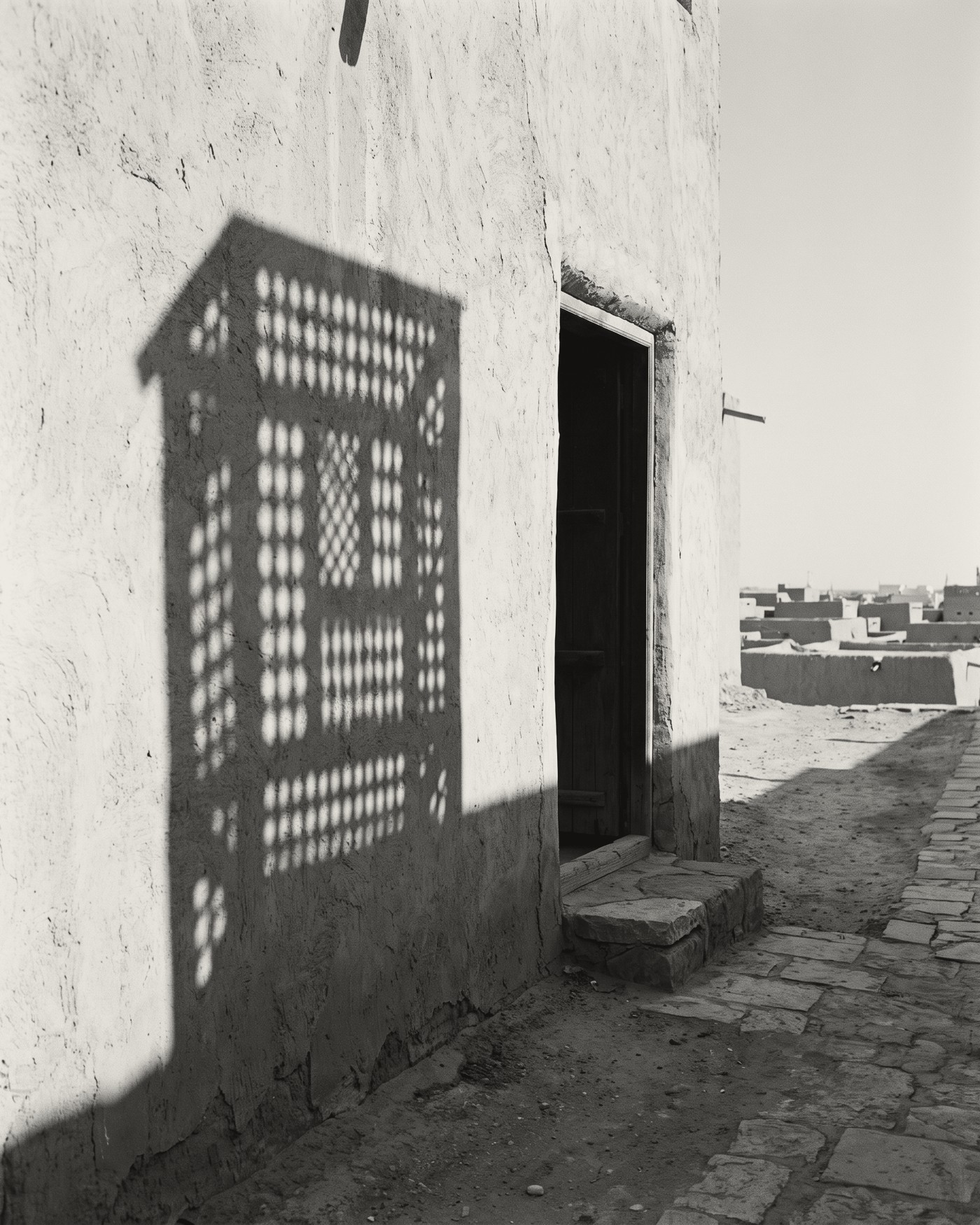
Saudi Arabic — the Arabic people actually speak, in offices and taxis and barbershops in Riyadh — is the hardest thing I have ever tried to get into my head. Not because the grammar is monstrous. Not because the script is impenetrable. It is hard because there is no single target to aim at, and the tried and tested path has always been to start with the grammatical structure. You think you are learning Arabic. You are not. You are learning one version of it, spoken by some people, in some places, in some situations, and the moment you step outside that circle the ground moves under you.
Here is what I got wrong, what I eventually got right, and what I would tell anyone starting from where I started.
There is no such thing as “Saudi Arabic”
Let me kill this idea first, because it cost me months.
Saudi Arabia is roughly the size of Western Europe. It does not have one dialect. It has several, and the differences are not trivial regional accents — they are the difference between a Glaswegian and a Cornishman having a fast conversation in a noisy room.
Najdi in the centre, including Riyadh (shoutout to my Qassimi friends too!). Hijazi on the west coast, in Jeddah, Mecca and Medina — softer, more cosmopolitan, shaped by centuries of pilgrims arriving from everywhere. Gulf Khaleeji in the Eastern Province, leaning towards Bahrain and Kuwait. Southern varieties in Asir and Jazan that shade into Yemeni and can be genuinely opaque to a man from Riyadh, from what I’ve heard. Northern varieties near the Jordanian and Iraqi borders. Layered on top of all that is a Bedouin and settled split that cuts across geography entirely.
So which one do you learn? You learn the one where you live and work. For me that is Najdi.
Once I accepted that, things got better. The qaf is a hard g, so قال is gaal, not qaal. The future is راح or a stuck-on بـ. The feminine “you” ending slides towards -ich — kashkasha — so a sentence you thought you understood arrives sounding like a different word entirely. None of that is in the app. All of it is in the context.
And the traps are cheerful ones. سوالف (sawaalif) means chat, gossip, the stories people swap over coffee. It does not mean sideburns, which is what I confidently assumed in a barbershop. يمكن means “maybe”, not “is it possible”. لسه will mark you out instantly as someone who learned from Egyptian television.
The Duolingo mistake
I started with Duolingo. Green owl, daily streak, all of it. Months of it. I should have tested my Arabic a lot more with friends, but the lack of confidence stopped me from catching my mistake early on.
What I was actually learning was Fusha — الفصحى, “the eloquent one” — Modern Standard Arabic. The language of newspapers, news broadcasts, government documents, formal speeches and the Qur’an. It is a magnificent language. It is understood across twenty-odd countries. It is also, in a Riyadh office, close to useless as a spoken tool.
Turning up and saying أريد (ureed) for “I want” is not wrong, exactly. It just lands like walking into a pub and announcing “I desire a beverage.” Everyone understands. Everyone also knows immediately that you learned this from a book. The word you want is أبغى or أبي. Not لأن for “because” — عشان. Not ثم for “then” — بعدين.
Here is the honest version of this complaint, though, because I have heard people overstate it and I do not want to join them: Fusha was not wasted. It gave me the root system, the verb patterns, the script, and the ability to read a sign or a contract or a news headline. Every hour of it is still paying out. The mistake was not learning Fusha. The mistake was believing Fusha was speech. Nobody tells you that. The app certainly doesn’t.
If I were starting again I would do both, deliberately, with my eyes open. Fusha for reading and structure. Najdi for my mouth. Two tracks, running in parallel, and no confusion about which is which.
It is a genuinely beautiful language
Now the part I did not expect.
Arabic is a lovely language to live inside. Once you see that words are built from three-letter roots, the whole thing stops being vocabulary and starts being architecture. K-T-B gives you writing, a book, a writer, an office, a library, a desk. You stop memorising words and start recognising families. It is one of the great pleasures of the language and it arrives suddenly, like a lens clicking into focus.
Then there is the social texture. Saudi Arabic is generous in a way English simply is not. English has “thanks.” Arabic gives you يعطيك العافية — may God give you health and strength — which you say to someone who is working, or who has just finished working, and which has no clean English equivalent at all. And the phrases stack. You do not use one. You use three, warmly, and the other person stacks three back. Nothing about that is empty formula. It is the Saudi culture doing its accounting out loud.
And the writing. Having grown up in Malaysia, I had admired Arabic calligraphy for years without understanding a stroke of it. Now I can read it — badly, slowly — and it is a completely different experience. There are whole families of scripts: the clean, readable Naskh of printed books; the grand, sweeping Thuluth you see carved into buildings; the dense angular Kufic; the ornate Diwani of official documents; and Ruq’ah, the plain cursive people actually handwrite. Learning to write your own name in it is one of the more satisfying afternoons available to a grown adult.
Be willing to sound like an idiot
This is the single biggest lever, and unfortunately there are no hacks or shortcuts that can spare you the blushes. Not an app. Not a textbook. Not a tutor.
Your ability to make progress in a spoken language is capped by your tolerance for embarrassment. That is the whole game. Most adults never get past it, because most adults have spent thirty years building a professional identity around sounding competent, and speaking a new language badly feels like a public demolition of that.
Do it anyway. Butcher the pronunciation. Use the wrong word. Ask for sideburns when you meant to make small talk.
What happens when you do is the thing nobody warns you about: people are delighted. Genuinely, visibly delighted. Saudis are not sitting there marking your grammar. They are watching someone make an effort in their language, in their country, and the temperature of the conversation changes on the spot. A transaction becomes a chat. You get corrected, kindly, and the correction sticks in a way no flashcard ever has, because it came attached to a small moment of embarrassment.
Your ability to make progress in a spoken language is capped by your tolerance for embarrassment.
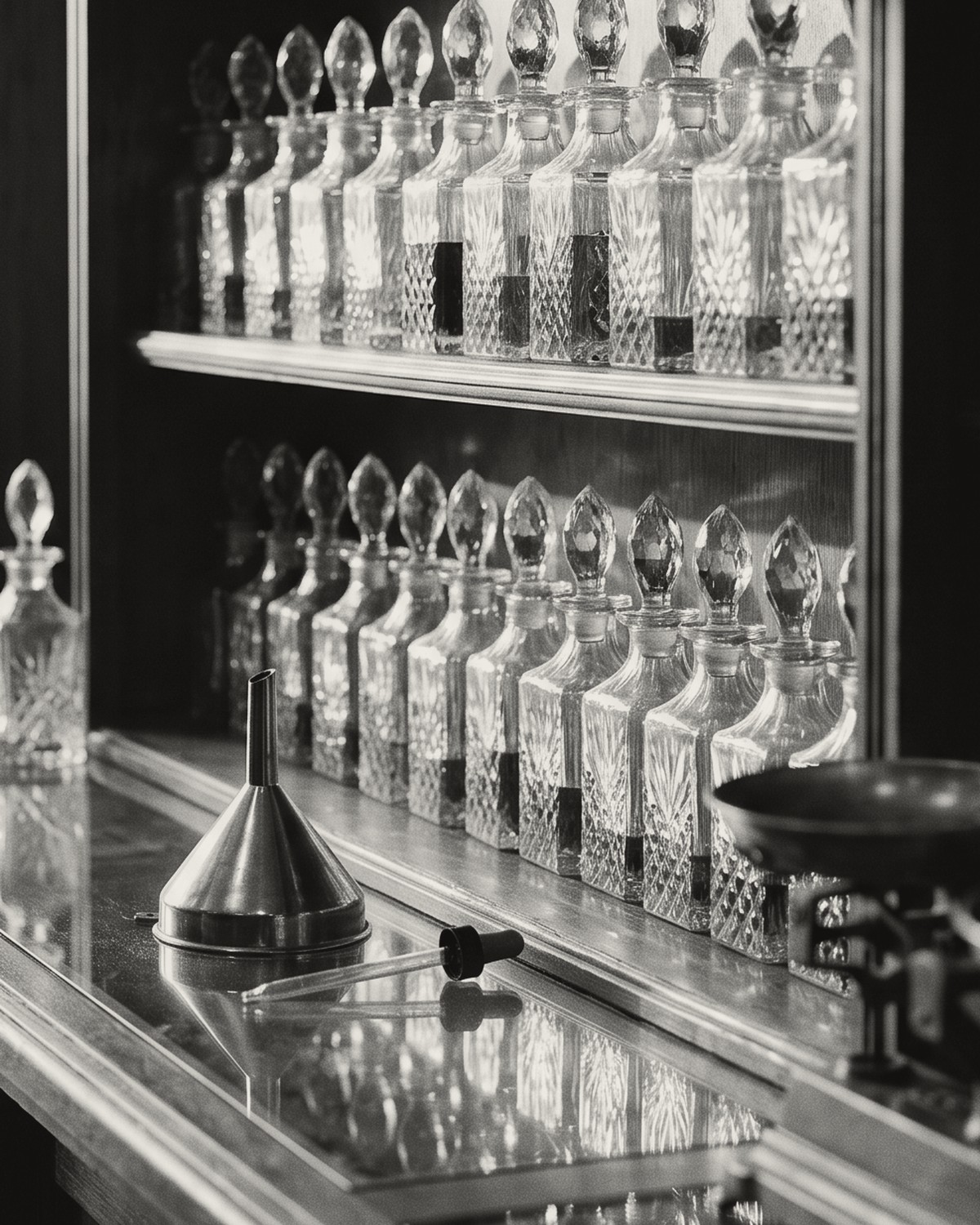
I have learned more from being laughed at trying to buy a tolla (that’s about 12 ml in case you’re wondering) of perfume oil in a perfume shop than from any month of drilling. The laughter was never unkind. Not once.
Speak first. Be accurate later. That order is not negotiable.
Building my own course with AI
The last piece was structure, and this is where things genuinely shifted.
The problem with dialect is that the resources barely exist. There is a mountain of material for Fusha, plenty for Egyptian, a fair bit for Levantine — and very little for Najdi. I didn’t have time to attend in-person classes, so I built an app for my own use.
I use Claude to run the whole thing. Not as a magic answer machine — as a patient tutor who never gets bored and never makes me feel slow. The workflow is simple:
A proper lesson plan. Not “learn Arabic.” Actual domains and situations that are most useful for me, sequenced. Office and scheduling language. Meetings and obligation. Security passes and building access. Then the service contexts — taxis, pharmacies, restaurants, barbers, the perfume shop. Then the social machinery: greetings, gratitude, condolences, Eid.
Weekly, bite-sized lessons. Small enough that I actually do them on a Tuesday evening. Twenty new items, not two hundred.
The format that works for me. Arabic script and transliteration side by side. Word-by-word breakdowns. Full conjugation tables when I want to drill a verb. And always — always — the contrast between what the textbook would say and what a Riyadh colleague would actually say. That single column is worth more than everything else combined.
Audio. Hearing it, repeating it, getting the hard g and the throat consonants into muscle memory rather than leaving them as theory on a page.
Follow-up questions, endlessly. This is the real unlock. When I get a phrase, I can immediately ask why that preposition, what the root is, how it changes for a woman, whether it is too formal for a colleague I know well. That is the kind of drilling you could never justify asking a human teacher for at eleven at night on a Thursday.
It is not a replacement for speaking to people. Nothing is. But it turned a scattered, frustrating hobby into a structured programme with a direction of travel, and the difference in my progress since is not subtle.
Where I’ve landed
Learning the Arabic of the place you live is not a linguistic project. It is a decision to stop being a visitor.
You will feel stupid. You will learn the wrong dialect for a while. You will ask a barber about gossip and get a confused look. Keep going anyway.
Show up. Do the work. Be willing to sound silly.
It is literally that simple. It is also, by some distance, the most rewarding hard thing I have done since I got here.
بالتوفيق