 My Second Life
- Section
- 02 Wealthy
- Reading
- 9 min
- Published
Why I Changed My Mind About Gold
Money printing, crowded central bank vaults, and a very hard-working metal called silver. Plus the one rule that keeps me honest.
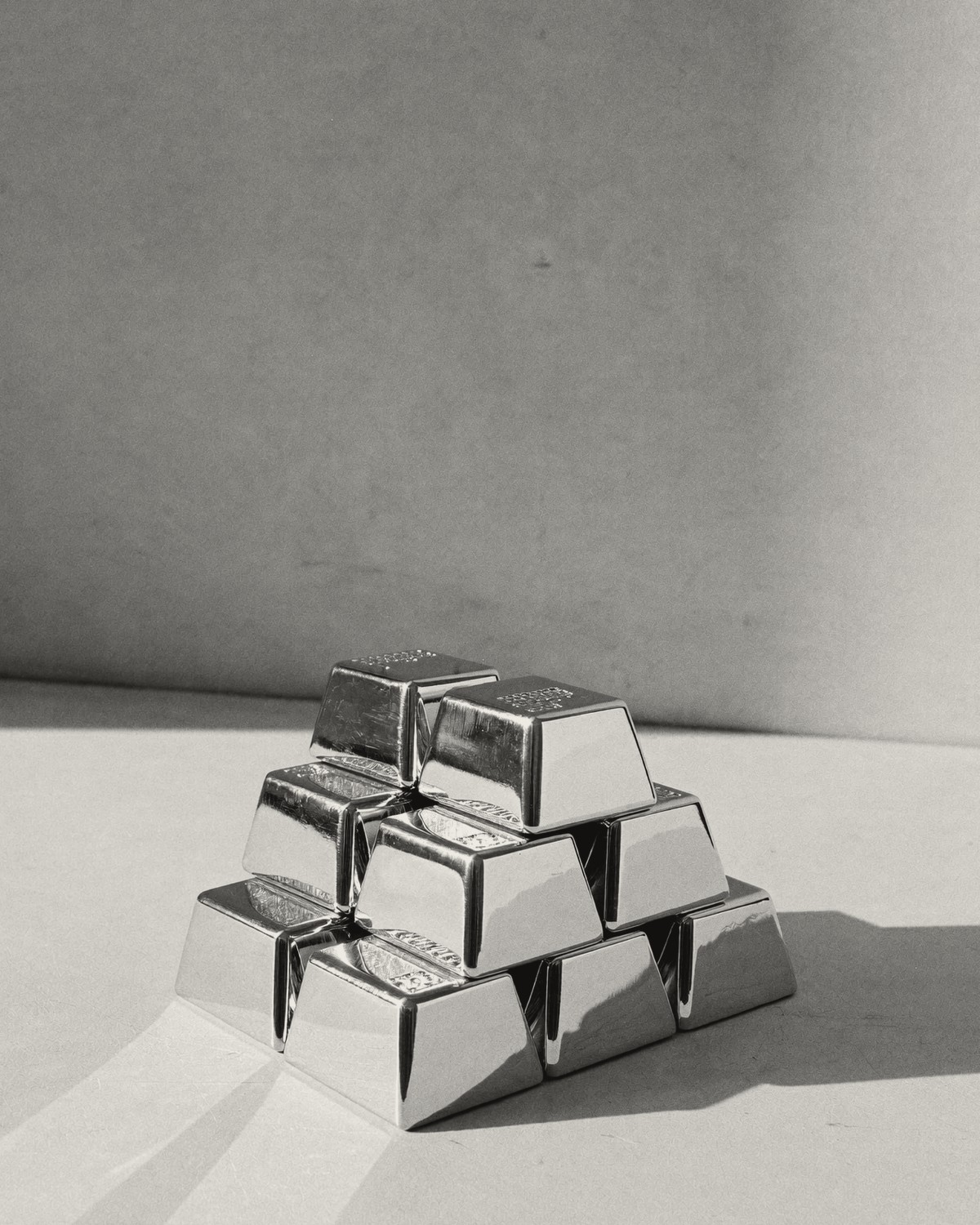
For most of my investing life, I thought gold was either a pet rock, or an obsession for rappers and old Asian aunties.
It pays no dividend. It doesn’t grow, hire, invent or compound. You buy it, lock it away, and then pay someone to guard it. Stocks, by contrast, are claims on real businesses full of people who get up every morning trying to make things better. Over long stretches of time during my lifetime, that engine has won. Comfortably.
I still believe most of that. But I’ve changed my mind about where precious metals belong in my own portfolio, and I’ve moved part of my money out of stocks and into gold and silver. Three things did it.
1. The printing press never really stopped
Here’s the number that got under my skin. Before the 2008 financial crisis, the US Federal Reserve’s balance sheet was under $900 billion. Three rounds of quantitative easing (QE) later, it was around $4.5 trillion. Then Covid arrived, and by 2022 it was nearly $9 trillion.
Roughly tenfold, in fourteen years.
Closer to home, the Bank of England bought £895 billion of bonds through its QE programme. In the US, the broad money supply grew by about a quarter in a single year during the pandemic, the fastest pace since the 1940s.
Then came the clean-up. The Fed spent three and a half years shrinking its balance sheet, and stopped at the start of December 2025 at about $6.6 trillion. That’s still more than seven times its pre-2008 size. Within days it was buying Treasury bills again. These were “reserve management purchases”, not QE, as it was careful to point out. (Fair enough. It walks a lot like a duck, though.)
That was the moment it clicked for me. The emergency measure had quietly become the operating model. And if the supply of money can be expanded at the stroke of a pen, I want some of my wealth parked in something that can’t be.
I’ll be straight about one thing: QE doesn’t push gold up in a neat straight line. Gold peaked at around $1,920 an ounce in 2011 and then slid to roughly $1,050 by the end of 2015, even as the Fed pushed its balance sheet to a then-record $4.5 trillion. Anyone who bought in 2011 purely on the money-printing argument sat through four very uncomfortable years. The logic is long term. The timing is anyone’s guess.
2. Watch what central banks do, not what they say
The second thing that changed my thinking was seeing who else was buying.
Between 2010 and 2021, central banks bought an average of about 473 tonnes of gold a year. Then something shifted. They bought more than 1,000 tonnes a year for three years running, from 2022 to 2024. 2025 “slowed” to 863 tonnes, which is still close to double the old average.
Poland alone added 102 tonnes last year. Gold is now 28 per cent of its reserves, and it has set itself a 30 per cent target. Kazakhstan, Brazil, Turkey, China and the Czech Republic were all buyers too, and the list isn’t confined to any one political bloc.
Then there’s this. According to the European Central Bank, gold made up 27 per cent of global central bank reserves at the end of 2025. That put it ahead of US Treasuries (22 per cent) and the euro (15 per cent). Part of that jump is simply the gold price going up, and I don’t want to oversell it. Still, the institutions that print money are choosing to hold more of the one reserve asset that nobody can print, and based on what I’ve read in the last few weeks, central banks are starting to repatriate a lot of that gold as well.
Central bankers are not gold bugs. They are cautious, committee-driven people. When they quietly back up the truck, I pay attention.
| By the numbers | Figure |
|---|---|
| US Fed balance sheet, before the 2008 crisis | under $0.9 trn |
| US Fed balance sheet, 2022 peak | nearly $9 trn |
| US Fed balance sheet when QT ended, Dec 2025 | about $6.6 trn |
| Bank of England QE, total | £895 bn |
| Central bank gold buying, 2010–2021 average | 473 t a year |
| Central bank gold buying, 2024 / 2025 | 1,092 t / 863 t |
| Gold share of central bank reserves, end-2025 | 27 per cent |
| — against US Treasuries / the euro | 22 / 15 per cent |
| Solar PV share of silver industrial demand, 2014 → 2024 | 11 → 29 per cent |
| Silver mined as a by-product of other metals, 2025 | roughly three-quarters |
| Gold record high / early Sept 2026 | $5,589 / ~$4,350 |
| Silver record high / early Sept 2026 | above $121 / ~$66 |
Key figures referenced in this piece. Prices approximate, early September 2026. Gold record set 28 January 2026; silver, 29 January 2026.
3. Silver: part money, part raw material
Gold is a monetary metal, pure and simple. Silver does two jobs.
It has been money for thousands of years. In French the word for money, argent, literally means silver. It is also one of the most useful industrial materials we have: silver conducts electricity and heat better than any other metal. It goes into solar panels, electric vehicles, phones, missiles, and the data centres behind the AI boom.
Solar has been the big story. In 2014, photovoltaics accounted for 11 per cent of silver’s industrial demand. By 2024 it was 29 per cent. Industrial use now takes close to 60 per cent of all the silver consumed each year. And the market has been in deficit, with more silver used than produced, every year since 2021. The Silver Institute is forecasting a sixth straight deficit for 2026.
The supply side is what really caught my eye. Roughly three-quarters of the world’s silver comes out of the ground as a by-product of mining lead, zinc, copper and gold. So when the silver price rises, miners can’t simply dig more silver. Supply is stubborn, and stubborn supply meeting steady demand is an interesting set-up.
Two caveats, in fairness. First, industrial demand isn’t growing in a straight line either. It peaked at around 680 million ounces in 2024 and dipped about 3 per cent in 2025, because solar manufacturers are working hard to use less silver per panel (high prices tend to do that). Second, silver is volatile. Properly volatile (and some say, prone to market manipulation). It hit a record of over $121 an ounce at the end of January 2026 and is trading around $66 as I write. That’s a drop of nearly half in about seven months.
Silver is gold’s wilder younger brother. I own some, but I keep him on a shorter lead.
How I actually hold it
I’ve split my holdings across three routes, because each one does a slightly different job.
Vaulted bullion in Singapore, through BullionVault. This is professional-grade bullion held in a vault in Singapore, one of Asia’s main bullion hubs. The gold sits in large London Good Delivery bars, the wholesale industry standard, and my share is legally mine rather than an IOU on someone’s balance sheet. Dealing costs are low, and I can sell online whenever I need to.
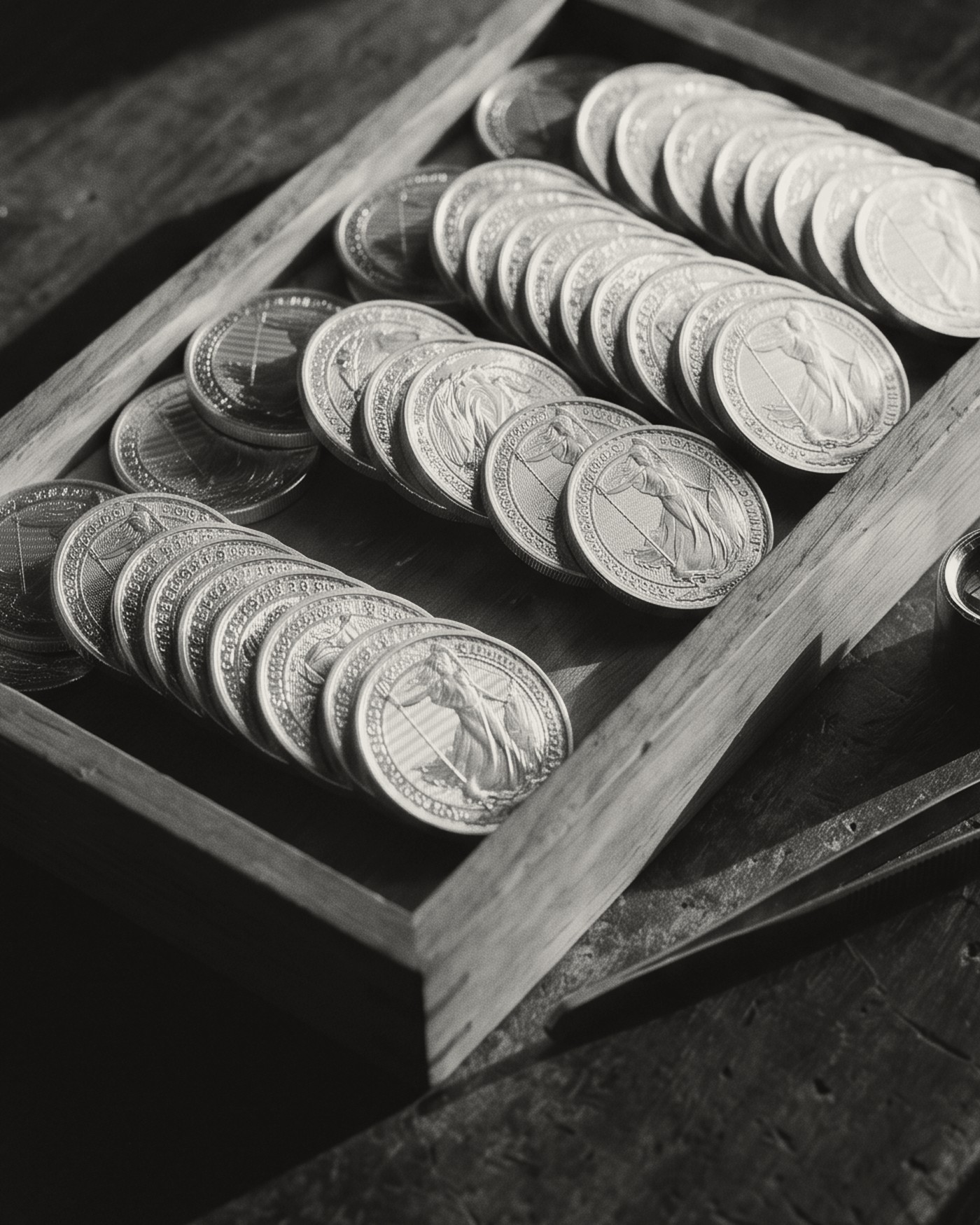
Gold coins: the Queen’s Beasts and the Tudor Beasts. I’ll admit it, I bought these partly because they’re beautiful. The Royal Mint’s Queen’s Beasts series (2016–2021) depicts the ten heraldic beasts that stood guard outside Westminster Abbey at the 1953 coronation. The Tudor Beasts that followed are inspired by the King’s Beasts on the moat bridge at Hampton Court Palace. They are small works of art you can hold in your hand. They are also bullion coins, so the premium over the spot gold price is modest and you aren’t paying through the nose for the artistry. As a bonus, Royal Mint bullion coins are UK legal tender, which makes them exempt from Capital Gains Tax for UK residents. A handy bonus for anyone who is, or later becomes, UK tax resident.
Physically backed gold and silver ETFs. This is the practical route. They trade like shares in a normal brokerage account, they’re easy to top up or trim, and they’re backed by metal sitting in vaults. The trade-off is that you own units in a fund rather than the metal itself, and you pay a small annual fee for the privilege.
The vault is my long-term store. The coins are the part I can hold, and the part I enjoy most. The ETFs are the easy-to-adjust part.
Why I stop at 15 per cent
This is where I part company with the gold bugs.
Like I mentioned previously, gold doesn’t pay anything. No dividend, no coupon, no rent. It will never compound the way a good business does. If you had bought gold at its 1980 peak of $850 an ounce, you would have waited 28 years just to get your money back in nominal terms, and roughly 45 years (until 2025) once you allow for inflation. Stocks did vastly better over that stretch.
So I don’t think of gold as something that makes me richer. I think of it as insurance that stops me getting poorer. Think wealth preservation, not wealth creation. Different tools, different jobs. You wouldn’t use a spirit level to drive in a nail.
That’s why I cap precious metals at 15 per cent of my total portfolio and my net worth. It’s enough to matter if the monetary system takes a nasty knock, and not so much that I give up the long-term compounding that equities and income-producing assets provide. For what it’s worth, it sits at the top of the 5–15 per cent range that Ray Dalio has argued for. It is not a small bet.
A cap also brings a bit of discipline. When metals run hard, as they did through 2025, they can grow past the limit, and the cap says it’s time to trim. When they fall, as silver has this year, there’s room to add. The rule does the thinking, so emotion doesn’t have to.
Where I could be wrong
I’d be kidding myself if I pretended this was a one-way bet. Here are the things that keep me grounded:
- Interest rates. Gold tends to struggle when cash and bonds pay a decent real return relative to inflation. With oil back near $100 and markets openly pricing a possible Fed rate rise this month, that headwind isn’t theoretical.
- Central bank appetite. Buying fell 21 per cent in 2025. If it keeps easing, one pillar of the story gets weaker.
- Thrifting. Solar makers are getting very good at using less silver. Industrial demand could keep slipping.
- Price. Gold more than doubled from the start of 2025 to its peak in January 2026, and it has since given back about a fifth. Buying after a run like that carries its own risk.
The bottom line
Gold isn’t going to make me rich. That was never its job. Its job is to still be there, holding its value, when other things aren’t. After watching the printing presses run for the best part of two decades, I’m happy to pay a small price for that peace of mind.
That’s my approach, for my circumstances. Yours may well look different, and that’s fine. If you’ve been through a similar change of heart, or think I’ve got this completely wrong, I’d love to hear from you.
Sources
Prices are approximate as of early September 2026.
- World Gold Council — Gold Demand Trends: Full Year 2025, Central Banks.
- MINING.COM — “Gold overtakes US Treasuries in global reserve shift: ECB”, June 2026.
- Silver Institute — Silver News, February 2026.
- Mexico Business News — World Silver Survey 2026 summary.
- Statista — global silver production by source, 2025.
- International Banker — “Why the Fed began a new phase of balance-sheet expansion”.
- Bloomberg — “Fed begins $40 billion monthly bill purchases”, December 2025.
- CBS News — highest gold price in history.
- Yahoo Finance — silver prices, 8 September 2026.
- Yahoo Finance — Ray Dalio says gold should be 5–15 per cent of your portfolio.
- BullionVault — the Singapore vault.
- The Royal Mint — gold bullion coins and Capital Gains Tax.